
Report: Children’s Health Care Coverage Loss in the Wake of H.R.1
Data publications
March 26, 2026
For decades, New York has been a national leader in reducing uninsured rates, particularly for children. Between 2008 and 2024, New York’s child uninsured rate fell from 6.2% (284,400) to 2.5% (102,800). This significant decline in the number of uninsured children can be attributed to two decades of state and national level advocacy aimed at expanding coverage options for children and families.
On July 4, 2025, Congress passed H.R.1 (also known as the One Big Beautiful Bill Act, or OBBA) despite strong opposition from advocates across the country who protested against the devastating impacts the bill would have on marginalized populations. In New York, one of the many harms of this act and related legislation will be the rollback of much of the state’s progress in reducing the number of uninsured children. A new analysis commissioned by Citizens’ Committee for Children of New York (CCC) underscores the detrimental impact the Act will have on children’s healthcare coverage:
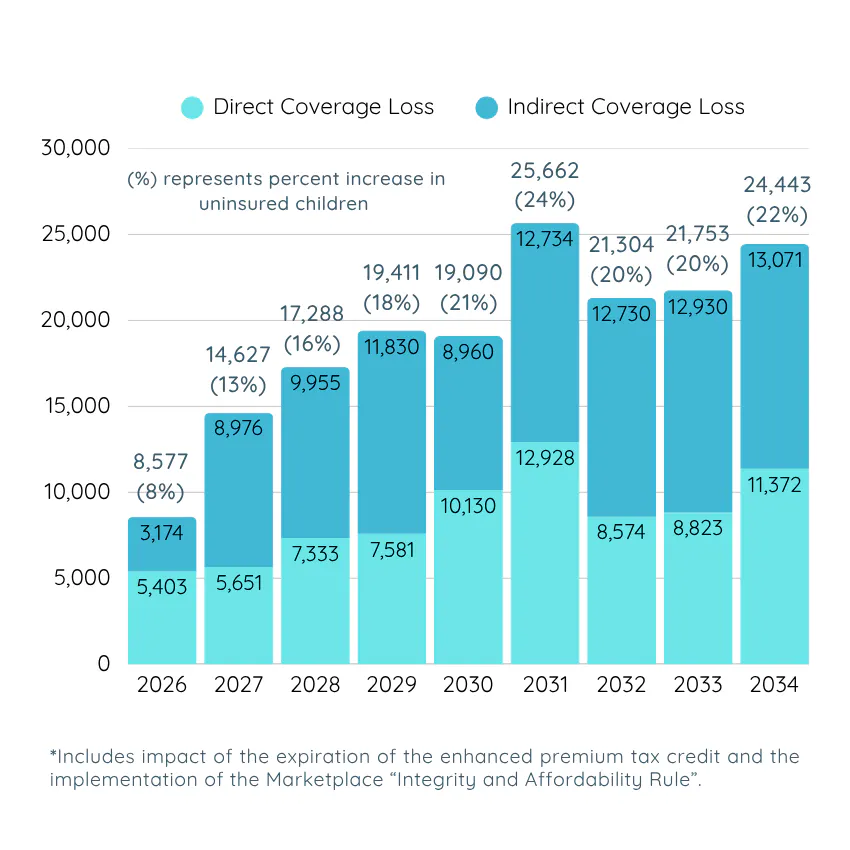
- H.R. 1 and other legislation from the 119th Congress will increase the number of uninsured children in New York by approximately 24%.
- Coverage losses will peak in 2031, when more than 25,500 children are estimated to lose coverage.
New York Children Losing Coverage as a Result of H.R.1
New York Children Losing Coverage as a Result of H.R.1 by Source of Coverage Loss
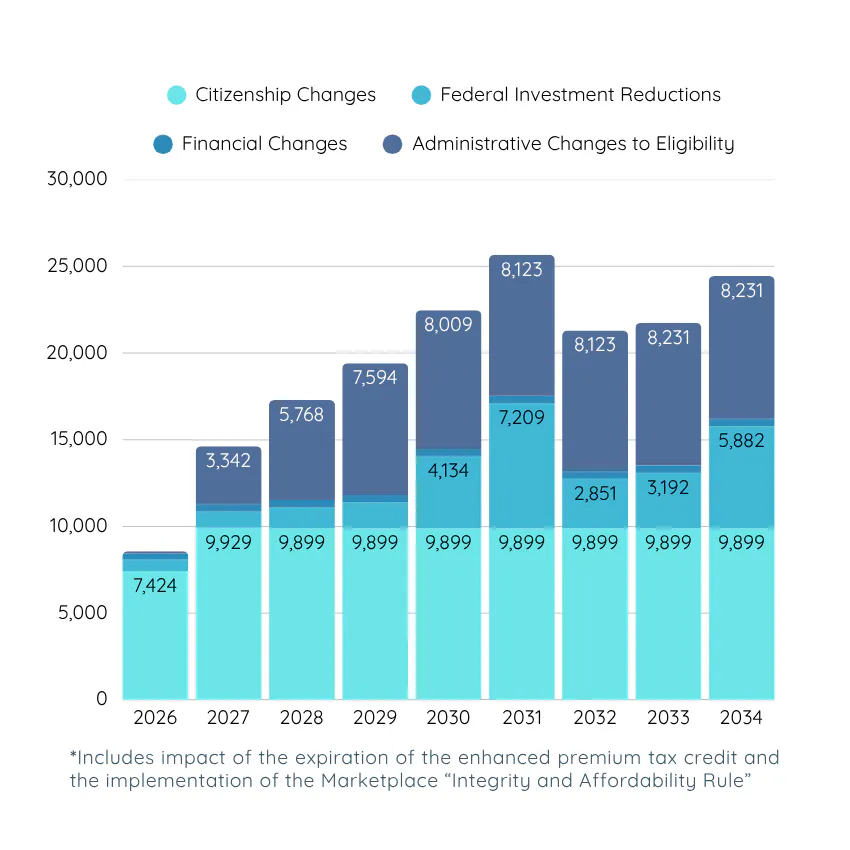
The analysis finds that declines will be driven not only by direct eligibility changes, but also by administrative barriers and the spillover effect when parents lose coverage, which accounts for a significant share of the impact.
The benefits of healthcare coverage for children are difficult to overstate.
- Children with health coverage are more likely to access preventive well-child visits, hearing, vision, and dental screenings, and on-time diagnosis and treatment.
- Inadequate health coverage results in higher rates of school absenteeism and dropout rates, as well as heightened risks of mental illness and poor health in adulthood.
- A healthy start to life depends on health coverage early on to ensure appropriate prenatal care that can reduce risks of infant mortality and preterm birth.
- Uninsured families also face greater risks of economic insecurity due to medical debt and financial hardship that can destabilize families and compromise child safety.
